As yet more headlines expose failures in maternity care, I've found myself reflecting on the experience that first set me on a path to improving health and care almost thirty years ago.
My early story is one in which I found my voice because I was lucky and privileged to be heard and seen by the team at Guys and St Thomas' maternity unit. Over the following three decades, I have been honoured to meet and work with some of the most courageous people, all striving for more human experiences of health and care. Many of them have found strength through great adversity to make incredible impacts and improvements in health and care.
Too often these people have had to fight to be seen and heard. But fuelled by their often tragic experiences, they have never given up. We have much to thank these people for. They show us what is possible, but often at significant personal cost.
But between those fortunate enough to be heard and those who have had to fight for change, there are thousands upon thousands of voices of people involved in health and care who don’t feel seen or heard. Imagine if we changed this?
When people feel seen and heard, they bring new ideas, energy, wisdom and solutions.
In order to see and hear others, you first have to feel seen and heard yourself.
A system of health and care that doesn’t allow people working within it to feel seen or heard risks minimising and diminishing those it cares for. The interventions and solutions we offer, therefore, must acknowledge the importance of creating space and time for all involved to fuel their fire, staff and people who use services alike.
We must recognise that care is fundamentally a human endeavour, achieved together through a relationship of equals that exists between those providing and those receiving care. When this happens, we can all feel seen and heard.
You never know what might happen when someone feels genuinely seen and heard.
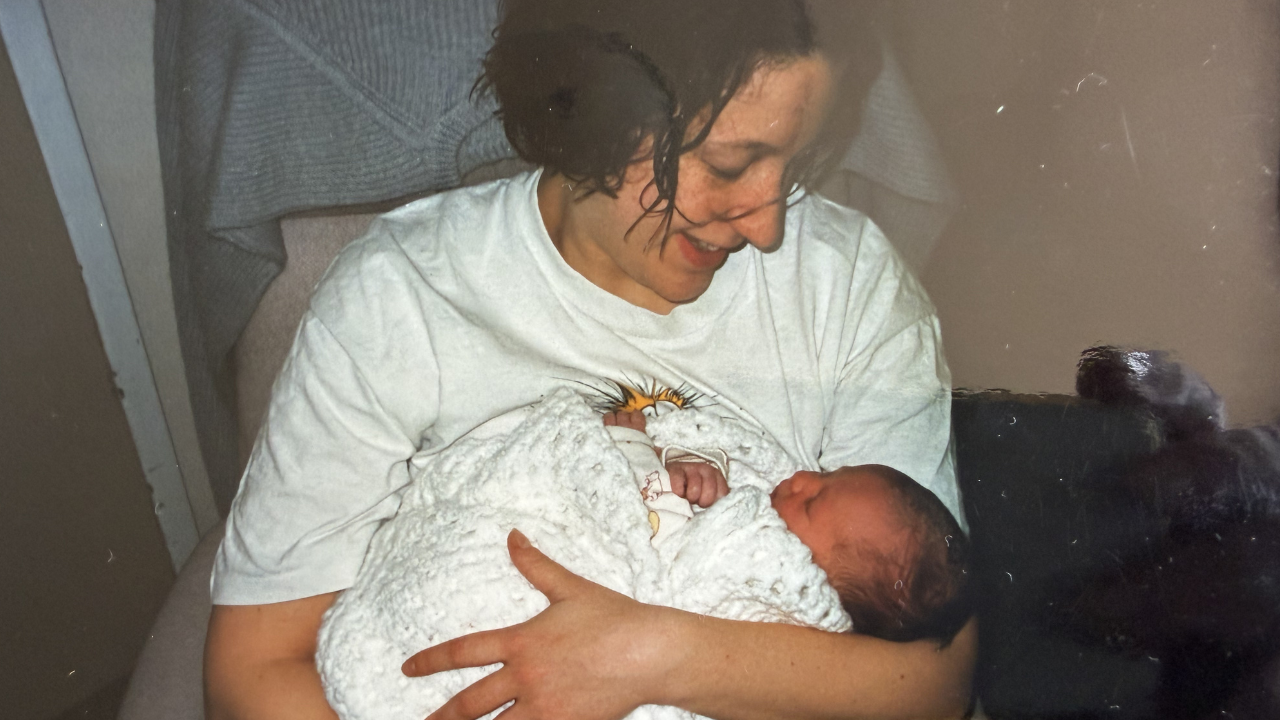
My own story starts nearly 30 years ago on January 2nd, when I gave birth to my eldest daughter Maisie at Guys and St Thomas’ hospital. We had wanted a home birth, but an anomaly in Maisie’s kidney presented an increased risk of Down’s syndrome. I suppose it is here that the embers of my fire began to glow.
Living with chronic endometriosis, I had already had a miscarriage and an ectopic pregnancy. We thought long and hard about the risks and how we would feel if we had a child with Down’s syndrome. We carefully balanced this with the risks of miscarriage associated with an amniocentesis and made a very important decision, that we would go ahead with the pregnancy without the amniocentesis and if our baby had Down’s syndrome that would be ok by us.
From this point on, things changed with how we were treated and made to feel by the medical professionals looking after us. We were made to feel immature, that we didn’t really understand the issues, that our decision was a dangerous one and – to be honest – that each time we tried to speak up we were a bit of a nuisance.
To cut a long story a bit shorter, I’m blessed to report Maisie arrived without complications.
The paediatrician looking after her in the days after her birth, asked if I would be interested in sharing my experience to inform improvements and so I found myself at a Maternity Services Liaison Committee meeting (the predecessor to the Maternity and Neonatal Voices Partnerships).
I could immediately see the opportunity to bring a different perspective to the table and how the voices and experiences of women and families could play an equal and powerful role in how maternity and neonatal care could be in the future. My fire was lit!
The brilliant Christina McKenzie, the Director of Midwifery at the time, found funding to cover the cost of my childcare (I had another baby within 15 months!), and resources to help me enrol in an MSc in Community Development. I went on to Chair the committee for 3 years. This recognition of the value of experience-based perspectives, and the acknowledgement that health and care is a collaboration between those providing and those receiving care, provided the necessary oxygen to fuel my flames. I am forever grateful for the belief and support given to me at this time.
Looking back, I don't think the most important thing that happened after Maisie was born was that I attended a meeting. It was that someone asked me a simple question: "Would you be willing to share your experience?" In that moment, I wasn't treated as a difficult patient or an anxious new mother. I was treated as someone whose experience had value.
Being heard didn't just change my experience of care; it changed the direction of my life.
That paediatrician probably had no idea that one simple invitation would shape the next thirty years of my life. It led me to influence policy, commissioning, coproduction and service improvement. More importantly, it taught me something I have witnessed time and again: people flourish when they feel seen and heard.
I've also learnt something else. We ask staff to see and hear patients every day. But if staff themselves don't feel seen, heard or valued, that becomes much harder. Compassion doesn't disappear because people stop caring. Often it disappears because people have nowhere left to give from.
Thirty years after my own maternity experience, we're still asking many of the same questions. Reports will recommend new policies, stronger oversight and better processes. Those things matter. But beneath them all lies a much simpler truth. Better care begins with people who feel seen and heard. Not just people giving birth. Not just patients and families. Everyone.